Lead Product Designer · Telecom · Visual Reasoning

Make complexity visible.

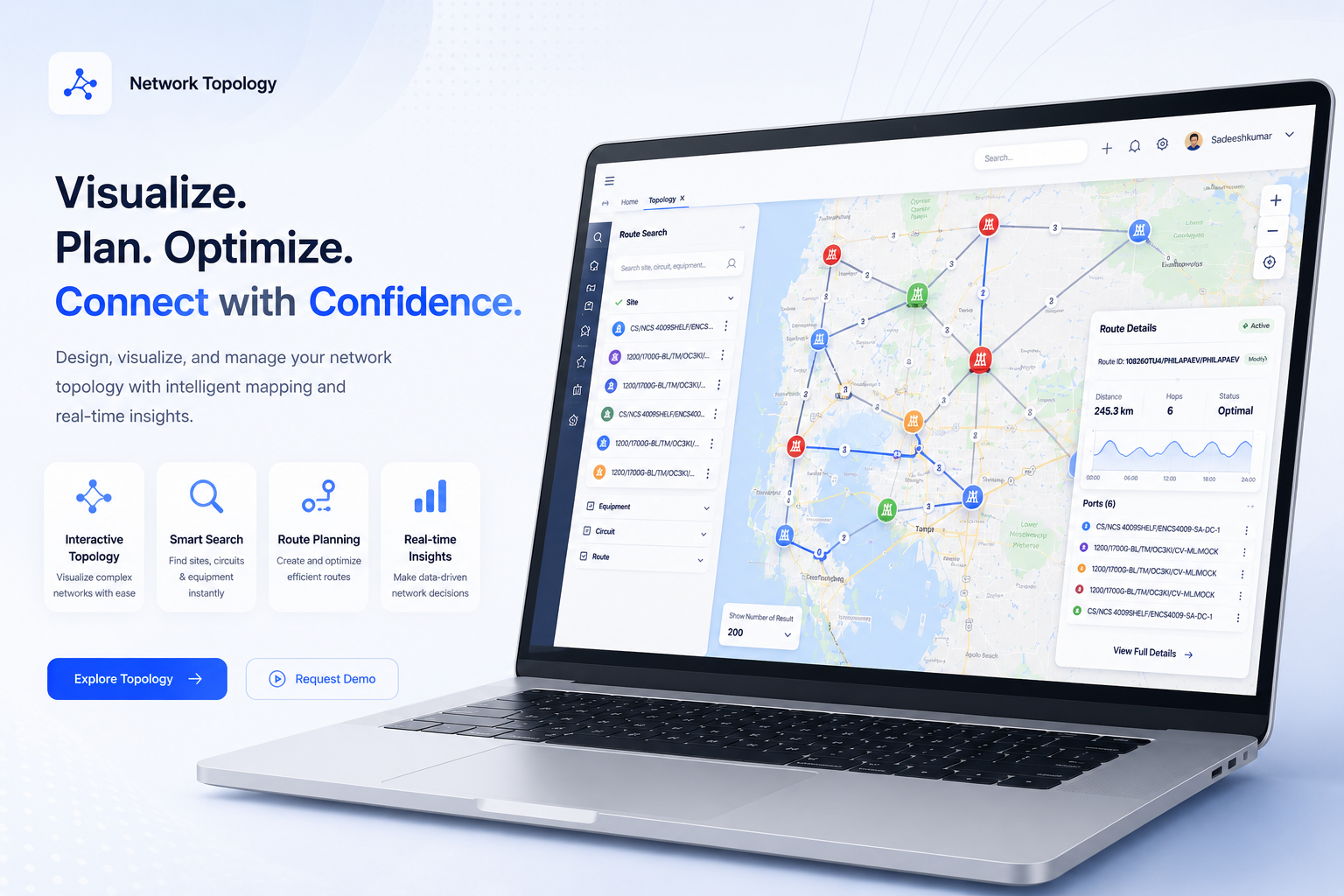
For more than forty years, network engineers had been designing some of the most critical infrastructure in the organization — without ever seeing it. The system forced humans to think like machines. This work shifted the platform from command-driven execution to visual reasoning, with AI supporting expertise instead of replacing it.

👁
Visual
First-class reasoning
Real-time
Validation in flow
🧠
AI-assisted
Suggest, flag, learn
🛡
Prevention
Errors caught early
Personas


Trusted by Leading Brands
TelecomNetwork engineersNOCField techService assuranceCompliance
Scroll
01 — Context

The system forced humans to think like machines.

01 — Project overview

From commands
to visual reasoning.

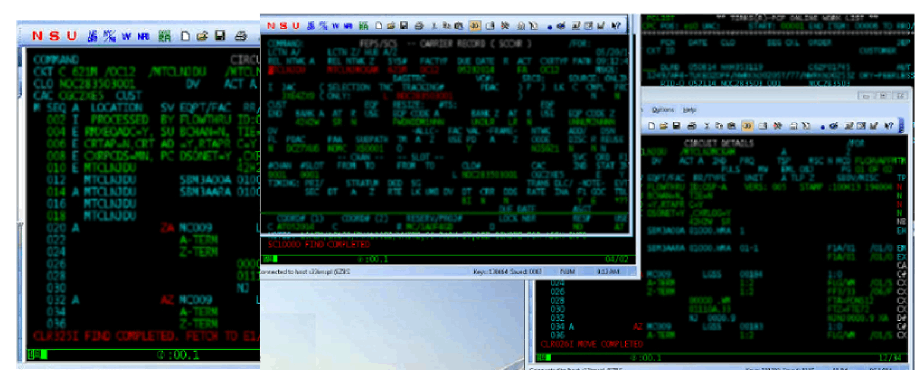
Engineers reason spatially and visually. The legacy system required memory instead of recognition, precision instead of understanding, and recovery instead of prevention. The problem wasn't skill — it was a backwards interaction model.

Legacy command-driven mainframe — the backwards interaction model that required engineers to think like machines
The legacy mainframe — making invisible complexity visible
01 — Context

Forty years of commands

Every network topology existed only in an engineer's head until deployed. No visual feedback, no confirmation, no early signal when something was wrong.
02 — Constraints

Errors discovered late

Designing even a basic network required memorizing hundreds of commands, executing them in exact sequences, and mentally simulating dependencies — errors surfaced after deployment when fixing them was costly.
03 — Opportunity

Support expertise, don't replace it

AI and ML could now assist, validate, and learn — without removing engineers from the loop. The opportunity was to make complexity visible.
Business objectives

What the organization needed to achieve

  • Reduce risk and rework caused by errors discovered after deployment
  • Cut training and onboarding time for network engineering
  • Improve collaboration and traceability across teams
  • Modernize a 40-year-old legacy interaction model
  • Establish a platform that scales across telecom operations
UX & design goals

What the experience needed to do

  • Shift from command-driven execution to visual-first design
  • Validate connections in real time instead of after deployment
  • Use AI to suggest, flag, and learn — without removing user control
  • Replace paper diagrams with living, shareable artifacts
  • Support expertise through recognition, not memorization
02 — Research & discovery

Engineers reason spatially.
The system didn't.

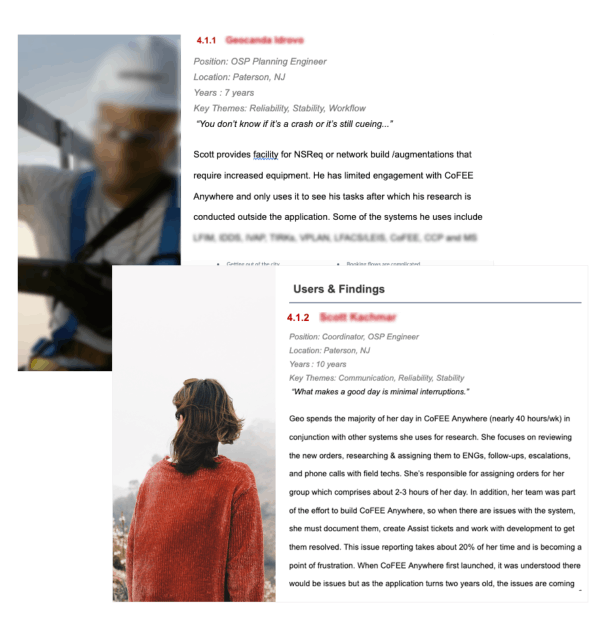
Research with experienced engineers revealed that the work was not constrained by skill — it was constrained by a system that required memory instead of recognition, precision instead of understanding, and recovery instead of prevention.

Network UX research
Network UX research

Personas were defined by operational roles, responsibility, and task frequency — Network Engineers, NOC Operators, Field Technicians, Service Assurance, Capacity & Planning, and Compliance and Operations Managers — each with distinct goals, decision authority, and risk exposure.

User journeys mapped fault detection, impact analysis, circuit tracing, capacity assessment, planned changes, and post-change validation — highlighting friction caused by dense topology views and manual reconciliation across tools.

"I'm designing something that's only real after I deploy it. That's terrifying."

Network engineer · Planning

"By the time I see the impact, the change is already in production."

Capacity & planning · Change-led

"If the system could just show me the topology, I'd save hours of mental simulation."

Service assurance · Validation
User personas

Six operational roles.

NE
Network engineer
Planning · Design-led
Designs network infrastructure. Needs visual reasoning, real-time validation, and the ability to preview impact before committing.
Visual-firstValidationPreview
NO
NOC operator
Monitoring · Incident-led
Manages active incidents and escalations. Needs unified topology views and rapid impact analysis under pressure.
Real-timeUnifiedEscalation-ready
SA
Service assurance
Audit · Validation-led
Validates changes and confirms operational integrity. Needs traceability, post-change validation, and auditability across topology decisions.
TraceableAuditablePost-change
03 — Core problem

Discover the error before the deployment, not after.

01

Command-driven model required memorization of hundreds of commands in exact sequences.

02

Engineers mentally simulated dependencies — every design carried unnecessary cognitive risk.

03

Errors surfaced after deployment, when remediation cost was already high.

04

Diagrams existed as printed documents — collaboration was slow, traceability poor.

04 — My role & execution

Drag, validate, preview.
Then deploy.

As Lead Product Designer, I conceived and designed the platform from first principles — interaction models, workflows, and system behavior — so engineers could see what they were building before they committed to it.

Networks became assembled through drag-and-drop interactions; connections validated themselves in real time; conflicts surfaced immediately, not after deployment; and engineers could preview the impact of decisions before committing. AI played a supporting role — suggesting options, flagging risks, and learning from historical patterns — while keeping engineers fully in control.

Responsibility 01

Conceive the platform

  • Designed the platform from first principles
  • Defined the visual-first interaction model
  • Established AI as supporting expertise, not replacing it
  • Set the principle that complexity must be visible
Responsibility 02

Design the new journey

  • Designed for awareness, discovery, assembly, validation, and confirmation
  • Networks built visually, not textually
  • Connections validated as they are created
  • Live preview before submission
Responsibility 03

Govern AI behavior

  • Defined where AI could suggest vs decide
  • Designed transparent flagging of risks and conflicts
  • Ensured AI behavior was explainable and traceable
  • Kept engineers as the final authority
Responsibility 04

Establish multi-view contexts

  • Designed contextual views: table, circuit layout, and map
  • Surfaced data intelligently based on intent
  • Reduced unnecessary steps and manual selection
  • Eliminated screen-by-screen reasoning
05 — User journey map

Awareness. Discovery.
Assembly. Confirmation.

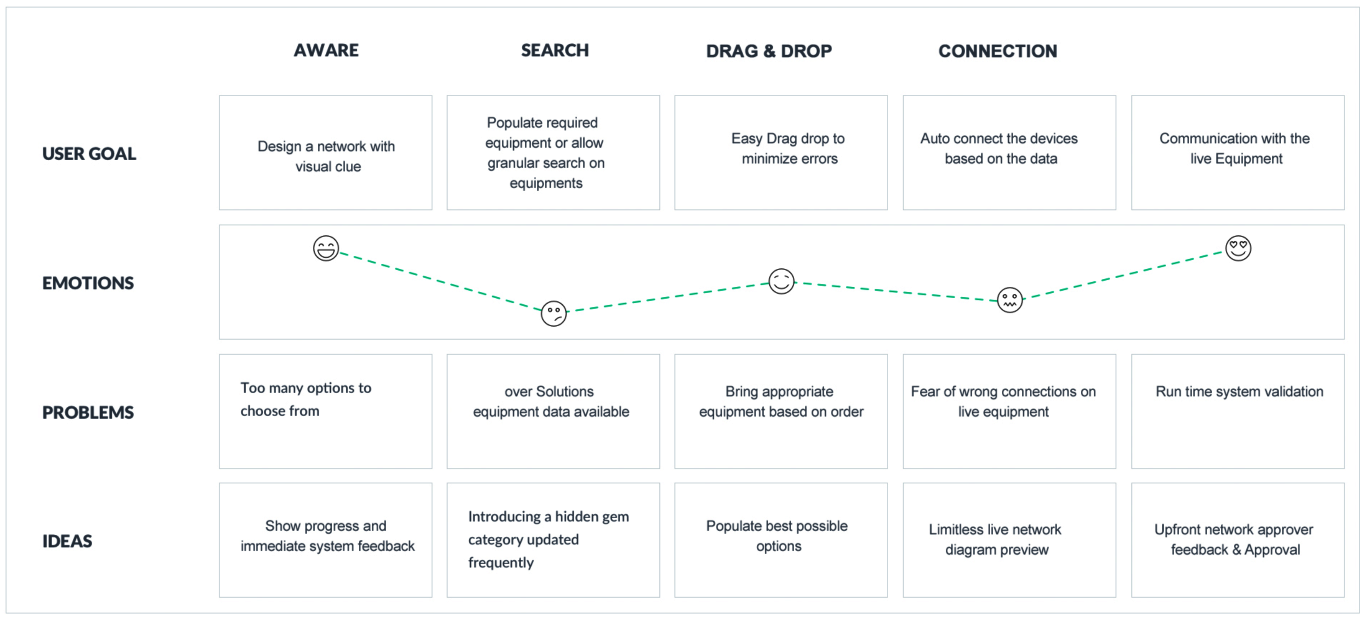
Designing a network became a clear, confidence-building flow — every step reducing uncertainty, every interaction reinforcing trust.

Operator journey
Operator journey
A new journey emerges — awareness, discovery, assembly, validation, and confirmation reduce uncertainty at every step
A new journey — awareness, discovery, assembly, validation, confirmation

Every screen, template, and confirmation message was anchored to a mapped moment. Every sign-off verified that the moment had been designed for, not assumed. The journey map was the canonical reference through every design and vendor review.

Stage 01
Discover
Relevant roles surface fast regardless of audience. Search, filter, and smart sorting reduce time-to-fit.
Stage 02
Evaluate
Growth signals, eligibility, and role fit visible above the fold. Candidates assess before committing to the apply flow.
Stage 03
Apply
Frictionless flow aligned to context and device. Mobile-first, multi-step with clear progress indication.
Stage 04
Post-application
Post-application visibility and communication shape long-term employer perception. Confirmation is strategy, not a detail.
Principle
"Trust in the brand."
Clarity, relevance, and trust drive candidate decisions — at every stage, on every device. The principle anchored every journey decision.
Drag to explore all stages
06 — Storyboarding, app map & wireframing

From sketches
to a working topology canvas.

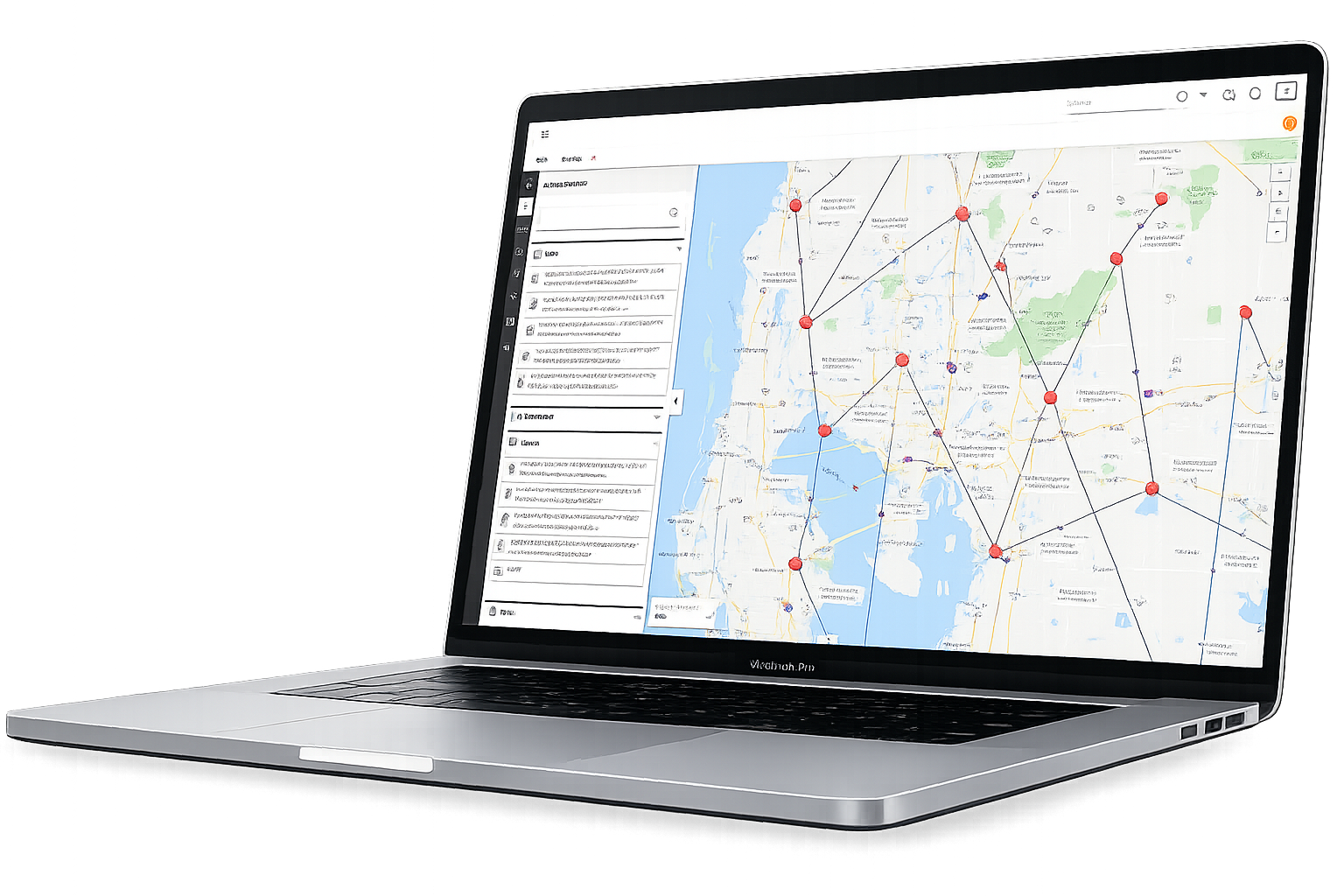
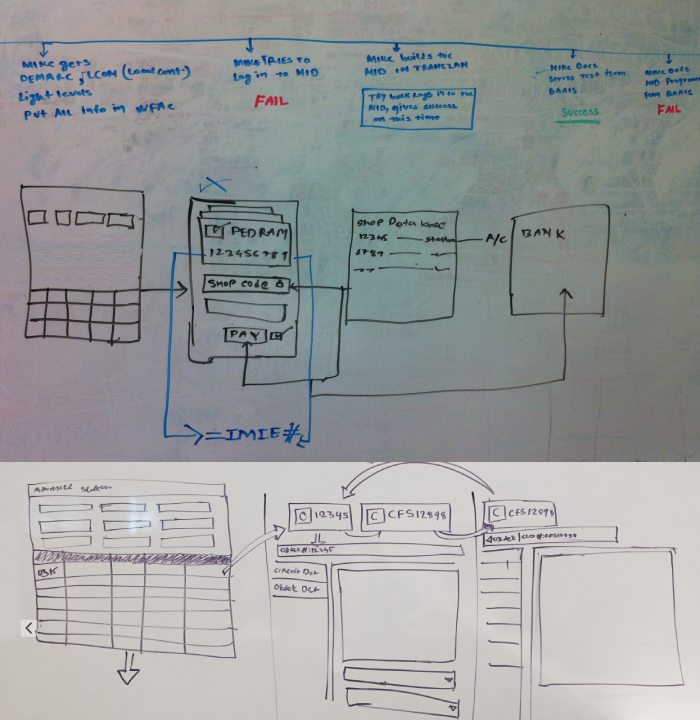
Whiteboarding simplified highly complex, multi-threaded network diagrams into linear, intuitive experience flows. Multiple contextual views — table, circuit layout, map — improved comprehension before high-fidelity design.

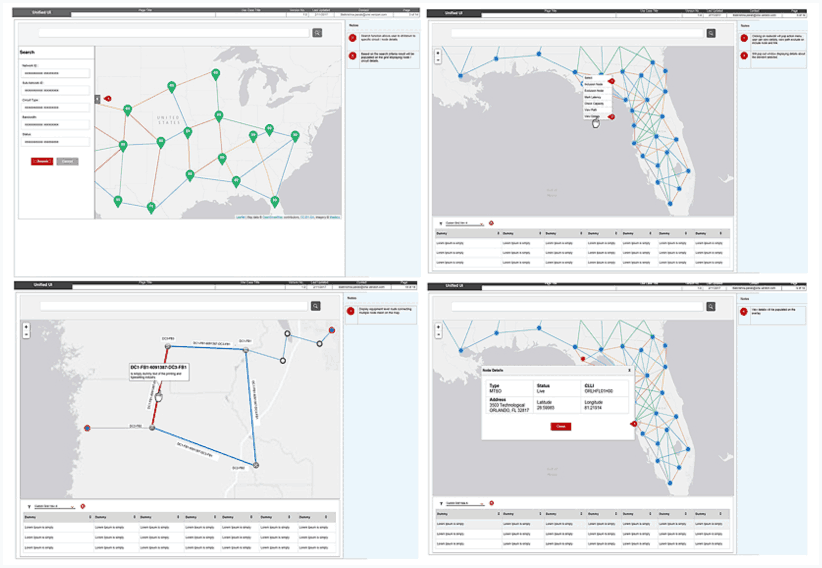
Topology wireframes
Topology wireframes
Whiteboarding & brainstorming — simplifying multi-layered network diagrams into linear, intuitive experience flows
Whiteboarding — simplifying complex diagrams into intuitive flows
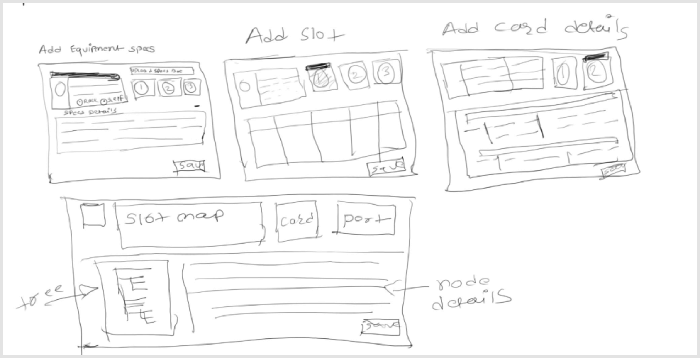
Early storyboards and structured brainstorming sketches mapping end-to-end journeys across interconnected systems
Storyboards & brainstorming — mapping end-to-end journeys

Every wireframe was traceable to a journey moment, and every IA decision was signed off before vendor execution. Storyboards were leveraged to align business, brand, talent acquisition, compliance, and vendor teams on what each moment had to feel like — before any pixels were committed.

Nodes · Links · Health overlays — the live topology canvas

Homepage Job Listing Role Detail Apply Flow Confirmation Status Track SEARCH & FILTER GROWTH SIGNALS MOBILE-FIRST TRUST-BUILDING VISIBILITY
07 — Design system & UI

Topology patterns.
System-level reuse.

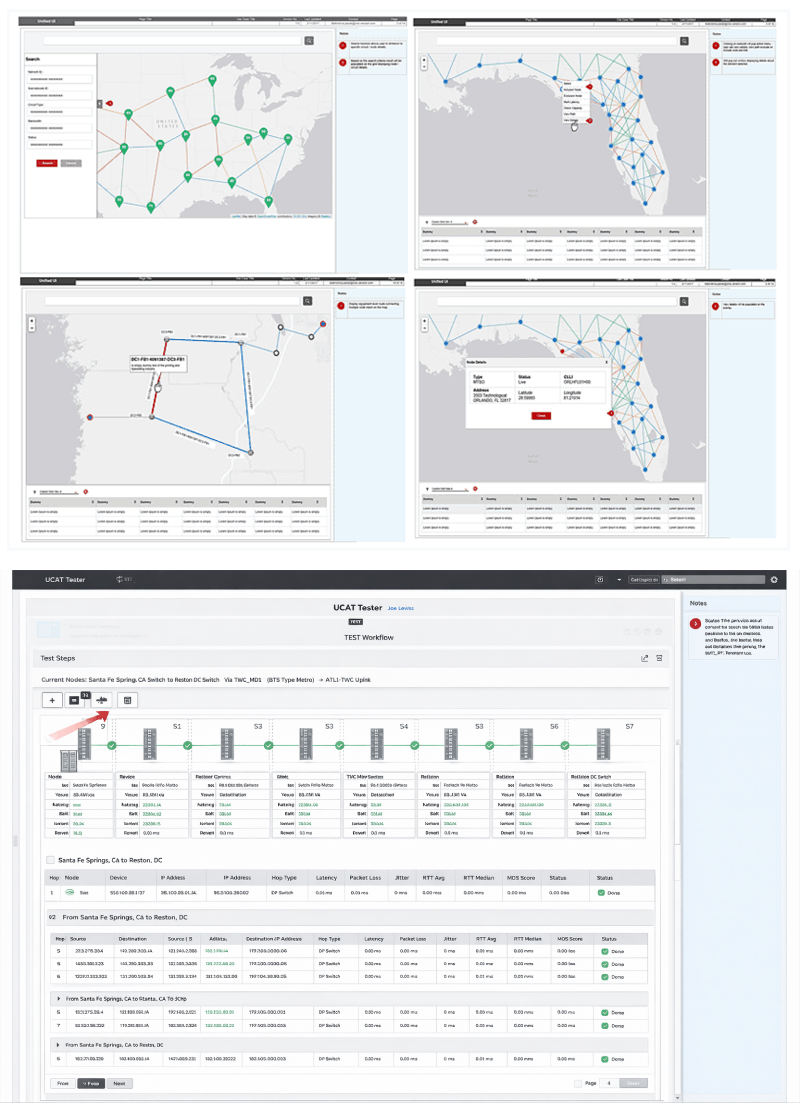
A reusable pattern library for canvas interactions, validation states, and AI suggestion surfaces — letting the platform extend without losing visual reasoning fidelity.

Refined design
Refined design
Colour · Network Topology
Network ops · cyan signal palette
Type · 2 families
Aa Aa
Display / Body pairing
Spacing · 8pt scale
8 / 16 / 24 / 32 / 48
Components · Modular
Reused across hiring journeys & programs
Aligned to Verizon brand neutrals
08 — Governance

AI as supporting expertise, not replacement.

08 — UX governance model

AI in service
of the engineer.

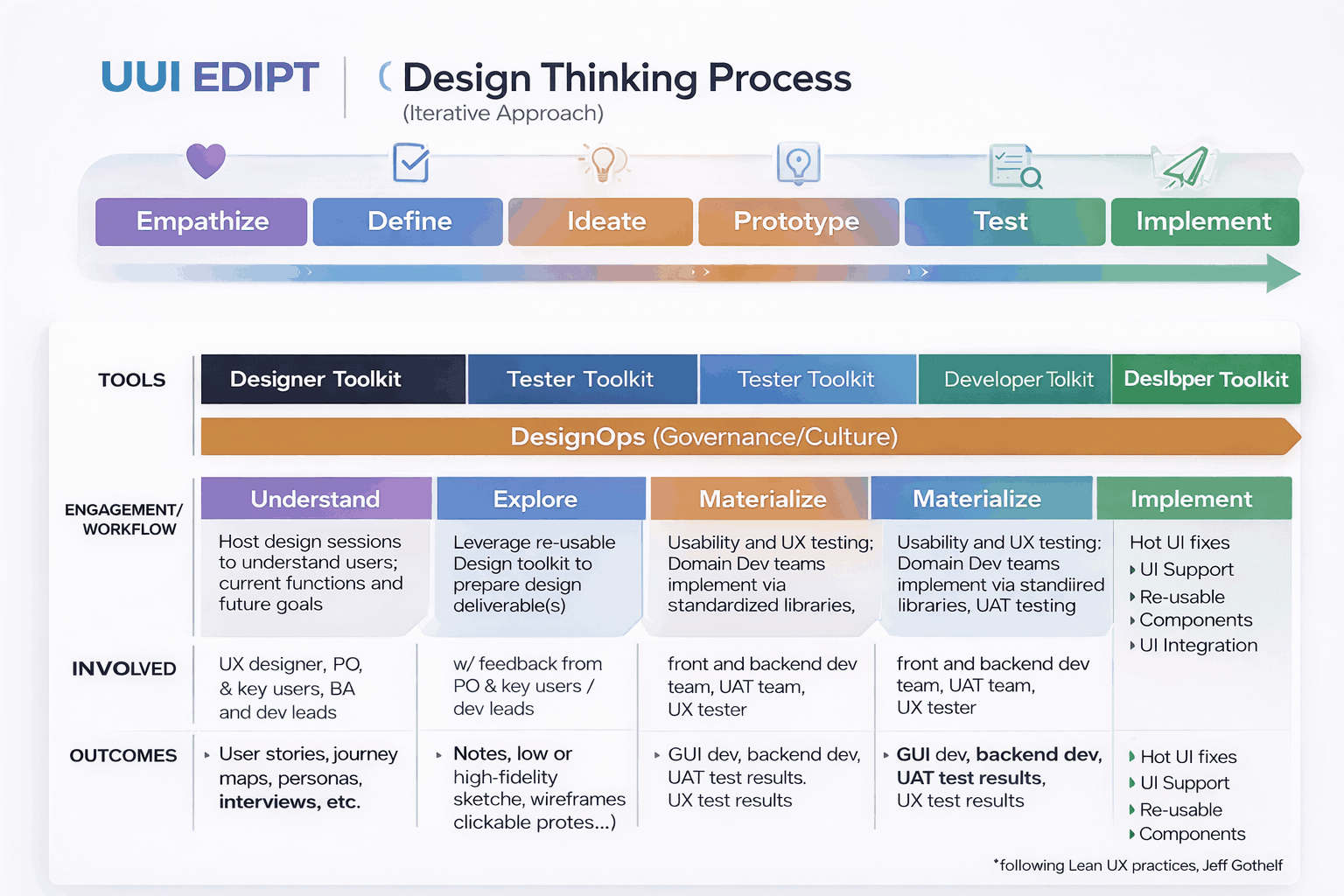
Governance defined where AI could suggest vs decide — engineers held final authority, AI behavior remained explainable and traceable, and operational risk stayed contained.

Core UX standards and risk controls were centrally maintained, while implementation remained flexible at the domain level. Governance was lightweight and embedded into delivery workflows, focusing on systemic risks — accessibility, regulatory compliance, brand integrity, apply-flow friction — rather than surface-level design. Continuous improvement was driven through analytics and shared learnings.

Pillar 01

Centralized standards

Core UX standards and risk controls maintained centrally — accessibility, brand expression, regulatory compliance. Reviewed and signed off by UX at executive level. The pen on every standard sat with the UX leader, not the vendor.
Pillar 02

Domain autonomy

Implementation flexible at the domain level — vendors and product teams ship within shared guardrails, not on top of them. Faster, safer iteration. The guardrail defines the boundary; what lives inside it belongs to the delivery team.
Pillar 03

Embedded into delivery

Lightweight governance running inside delivery workflows — focused on systemic risks, not surface design. Continuous improvement via analytics and shared learnings enabling the organization to scale while maintaining trust and consistency.
09 — Usability studies

Validated visually.
Tested under load.

Real engineers tested topology assembly, validation flows, and AI suggestion behavior under realistic scenarios — confirming that visual reasoning materially reduced cognitive load and errors.

6
Participants matching persona
5
Critical tasks tested
30+
Qualitative insights generated
4
Themes for refinement
Persona needs → design actions
Candidate needQuickly understand if a role is relevant to their skills and experience.
Design actionPersona-based usability testing to validate role clarity; restructured role pages with growth signals above the fold.
Candidate needFind suitable jobs without excessive scrolling or filter friction.
Design actionAnalyzed navigation paths and search behaviour; refined filters and sorting logic to match real candidate criteria.
Candidate needConfidence before starting an application — know what to expect.
Design actionImproved content hierarchy and CTAs; streamlined apply flow to reduce friction at the highest drop-off point.
Candidate needReassurance that submission was received and is being processed.
Design actionValidated confirmation messaging and post-application communication — redesigning as an employer-brand touchpoint, not a utility screen.
Candidate needFast, predictable apply flow on mobile under real conditions.
Design actionAudited and streamlined the apply flow; validated across primary device types matching the persona's usage context.
01

Clarity of roles

Role pages restructured so candidates established relevance within seconds. Headline, signal-bearing tags, and growth indicators surfaced before scroll.

02

Navigation efficiency

Filters and sorting logic refined to align with the criteria candidates actually used — not the criteria the platform exposed by default.

03

Application confidence

Content hierarchy and CTAs improved so candidates entered the apply flow knowing what to expect. Confirmation messaging validated to reassure on submit.

04

Pre-launch readiness

Insights translated into refinements before launch — reducing rework during vendor implementation and surfacing systemic issues that would have appeared only post-release.

10 — Outcomes

Critical infrastructure
is now designed visually.

Final designs were validated against UX guardrails — moving from a 40-year-old command-driven model to a visual reasoning platform with AI assistance, while keeping engineers in full control.

System mindmap
System mindmap

A 40-year-old command-driven system became a visual reasoning platform — design moved from mental simulation to visible complexity.

Outcome 01
Task completion time materially reduced — engineers reason visually instead of simulating mentally.
Outcome 02
Training effort lowered — recognition replaced memorization of hundreds of commands.
Outcome 03
Errors caught early — connections validate in real time, conflicts surface before deployment.
Outcome 04
Trust strengthened — AI suggests and flags, engineers decide; behavior is explainable end to end.
Outcome 05

Critical infrastructure designed visually, validated continuously.

The platform inverted the legacy model. Networks are assembled through drag-and-drop, connections validate themselves in real time, conflicts surface immediately, and engineers preview impact before committing. AI supports expertise by suggesting, flagging, and learning — while engineers stay in full control of every consequential decision.

Visual reasoningReal-time validationAI-assistedPre-deployment previewMulti-view contextTopology canvasCognitive load reductionRisk prevention
11 — Reflection

What I'd carry forward.

Designing for forty years of legacy command-driven expertise is a thinking problem first. These are the lessons I'd carry into any expert-tool transformation.

The hardest part wasn't the canvas.

It was shifting the system from asking humans to think like machines to making complexity visible.
01

Support expertise — don't replace it.

Experienced engineers don't need automation; they need their reasoning made visible. Visual-first interactions and AI suggestions worked because they amplified judgment instead of removing it.

02

Catch errors before deployment, not after.

Every shift from post-deployment discovery to in-flow validation reduced operational risk. The earlier the system surfaces a conflict, the cheaper it is to resolve.

03

Recognition beats memorization for expert tools.

Replacing hundreds of memorized commands with visible structure and contextual surfacing lowered cognitive load — even for engineers who had mastered the legacy system.

04

AI behavior must be explainable to be trusted.

Engineers adopted AI suggestions only when the system explained why. Governance over what AI could suggest vs decide preserved trust and accountability across operations.

Final deliverable

See the source case study.

View source case study