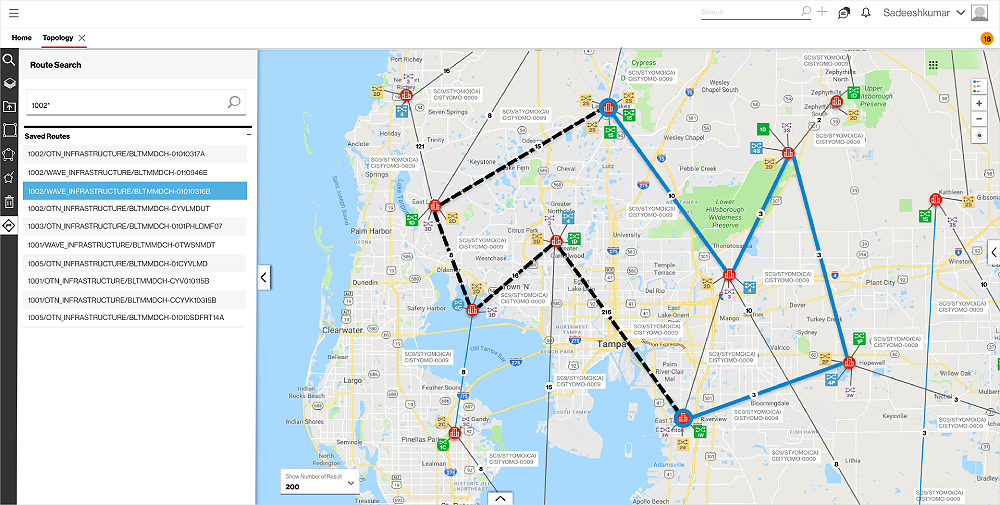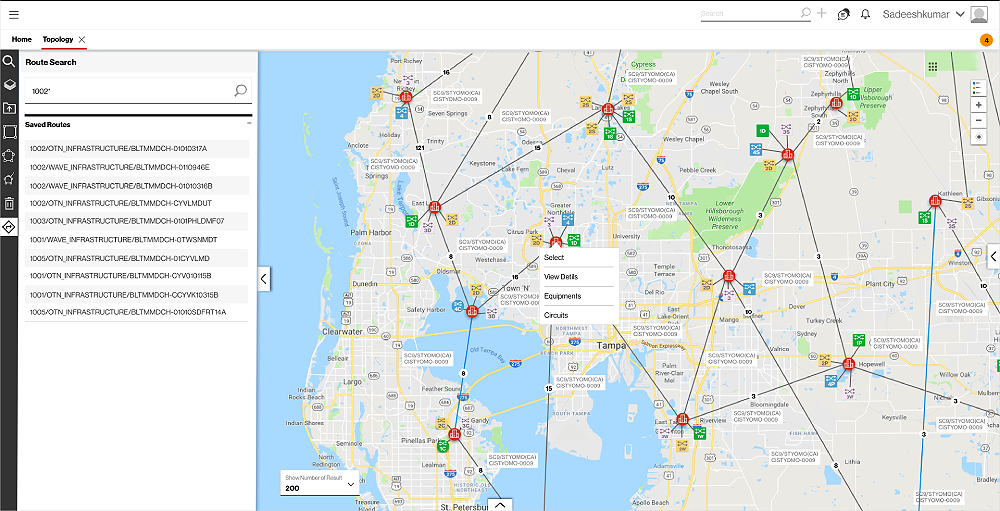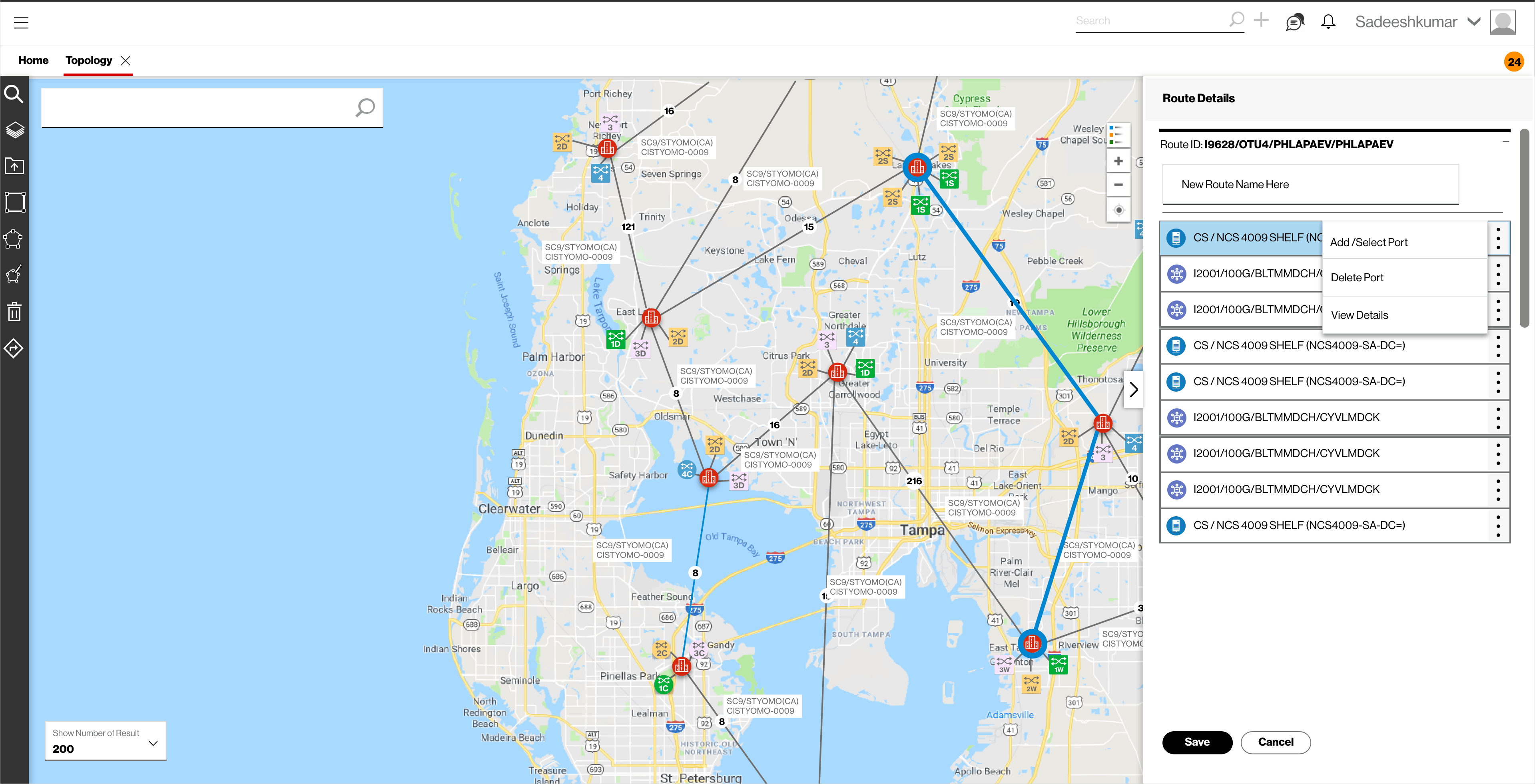


Project Overview
For more than forty years, network engineers had been designing some of the most critical infrastructure in the organization—without ever seeing it.
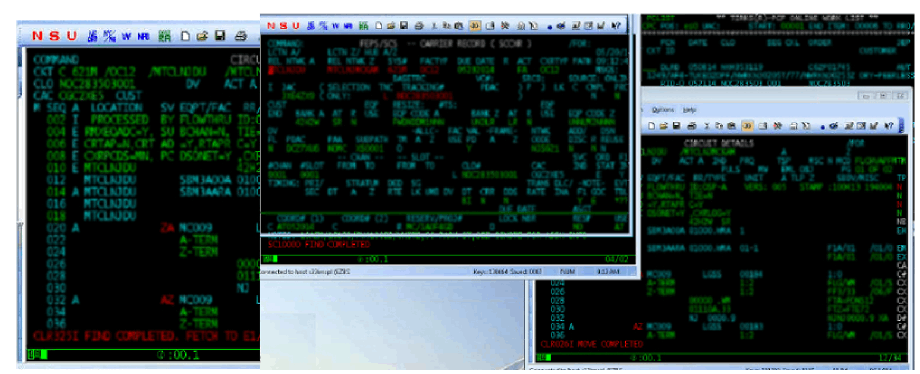
P The system they relied on was powerful, reliable, and deeply embedded in operations. But it was also entirely command-driven. Every network topology existed only in an engineer’s head until it was deployed. There was no visual feedback, no confirmation of what was being built, and no early signal when something was wrong.PTo design even a basic network, engineers had to memorize hundreds of commands, execute them in exact sequences, mentally simulate dependencies, and jump between multiple systems just to validate their work. Errors weren’t uncommon—but they were often discovered after deployment, when the cost of fixing them was already high. The problem wasn’t skill. These were highly experienced engineers. The problem was that the system forced humans to think like machines.
The UUI initiative focused on upgrading this legacy ecosystem into a single, intelligent platform that prioritizes time-to-task over time-to-train, improves usability, and enables long-term digital scalability. Rather than asking users to navigate across multiple systems, UUI was designed to bring systems to the user—fundamentally changing how work is performed across the enterprise.
The Realization: The System Was Backwards
When I started working on this platform, it became clear very quickly that this was not a usability problem—it was a thinking problem. Engineers think visually. They reason spatially. They build confidence by seeing relationships, flows, and constraints. But the system offered none of that. It required memory instead of recognition, precision instead of understanding, and recovery instead of prevention. Diagrams were exported as printed documents, passed around for review, and manually updated. Collaboration was slow. Traceability was poor. And every design decision carried unnecessary risk.
That’s when the opportunity became obvious: if engineers could see the network as they designed it?
The Shift: From Commands to Visual Reasoning
The goal was not to replace expertise—
but to support it.Instead of asking engineers to remember commands, the system could show them what those commands meant. Instead of discovering errors late, the system could surface them early. Instead of paper diagrams, the platform could become a living, shareable artifact.
With advances in AI and ML, the system could now do more than execute instructions. It could assist, validate, and learn.
This wasn’t about automation It was about making complexity visible
Designing the New Way of Working
As the Lead Product Designer, I conceived and designed the platform from first principles—working hands-on across interaction models, workflows, and system behavior.
The core idea was simple but powerful:
If engineers could see the network, they could reason about it.
The experience shifted to a visual-first model:- Networks were assembled through drag-and-drop interactions
- Connections validated themselves in real time
- Conflicts surfaced immediately, not after deployment
- Engineers could preview the impact of decisions before committing
AI played a supporting role—suggesting options, flagging risks, and learning from historical patterns—while keeping engineers fully in control. The system stopped asking users to simulate outcomes mentally, It showed them.
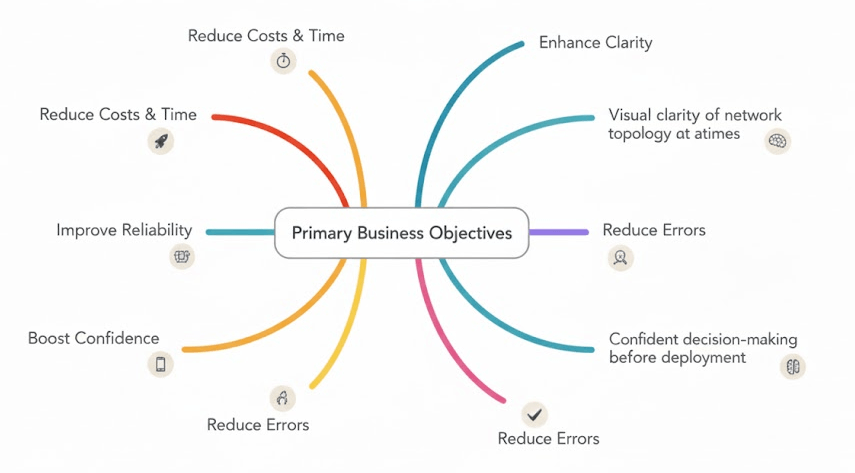
A New Journey Emerged
Designing a network no longer meant executing a sequence of commands. It became a clear, confidence-building flow:
Responsibilities
- Awareness — Immediate visual context of what’s being built
- Discovery — — Relevant components surfaced automatically
- Assembly — — Networks constructed visually, not textually
- Validation — — Connections checked as they’re created
- Confirmation — — A live preview before submission
Every step reduced uncertainty. Every interaction reinforced trust.
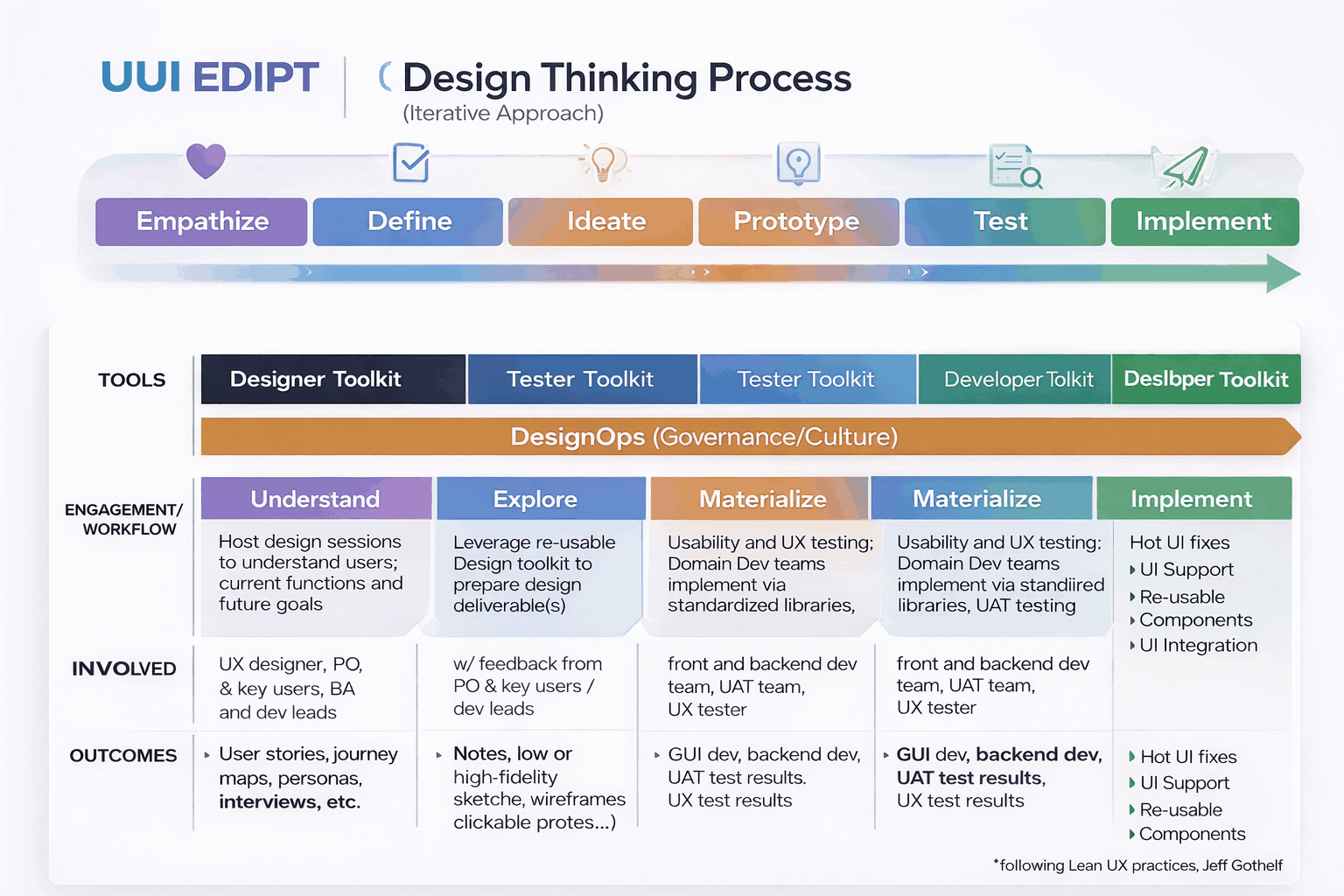
MY ROLE
As a lead UI/UX architect I held end-to-end accountability for the experience vision, governance model, and delivery outcomes within the Phenom ecosystem. My role extended beyond design leadership into organizational enablement and executive decision-making—directing how UX strategy was defined, operationalized, governed, and signed off across internal teams and external partners. I acted as the final authority on experience decisions, ensuring alignment between business objectives, regulatory requirements, platform constraints, and user needs.
Responsibilities
- Defined experience strategy and UX direction for the career site and candidate journeys
- Governed vendors to ensure alignment with UX standards, accessibility, and banking compliance
- Established UX intake and decision frameworks to reduce ambiguity and rework
- Enabled business, product, and technology teams with clear UX processes and ownership
Research & Insights
Research was hands-on, continuous, and embedded directly into design work, rather than treated as a separate phase.
I conducted:- Contextual inquiries and task walkthroughs with real users
- Observation of live workflows to uncover inefficiencies and workarounds
- Rapid validation through low-fidelity prototypes and feedback loops
A key insight consistently emerged:
Personas & User Journeys
Personas were defined based on operational roles, responsibility, and task frequency, rather than demographics, to accurately reflect how telecom and network teams function in real-world environments. Key personas included Network Engineers, NOC Operators, Field Technicians, Service Assurance Teams, Capacity & Planning Engineers, and Compliance and Operations Managers—each with distinct goals, decision authority, and risk exposure.
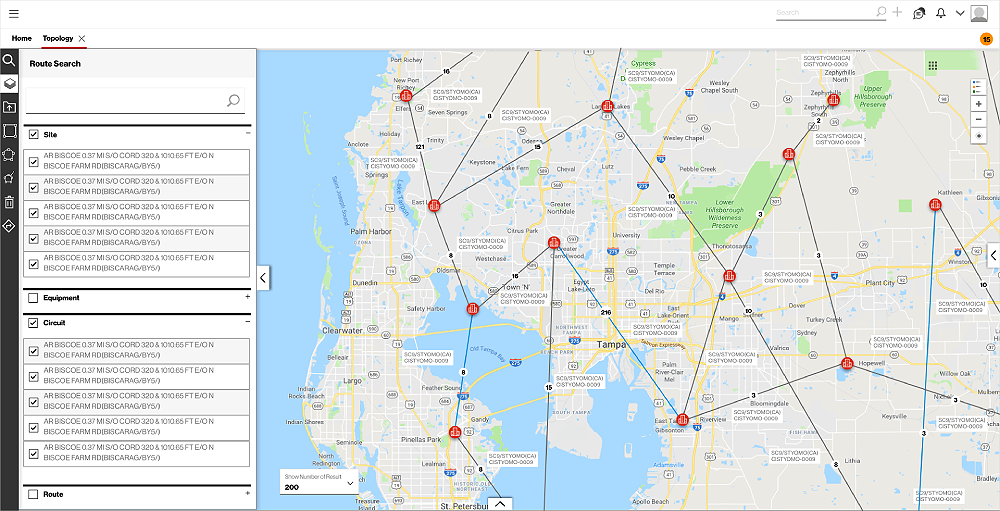
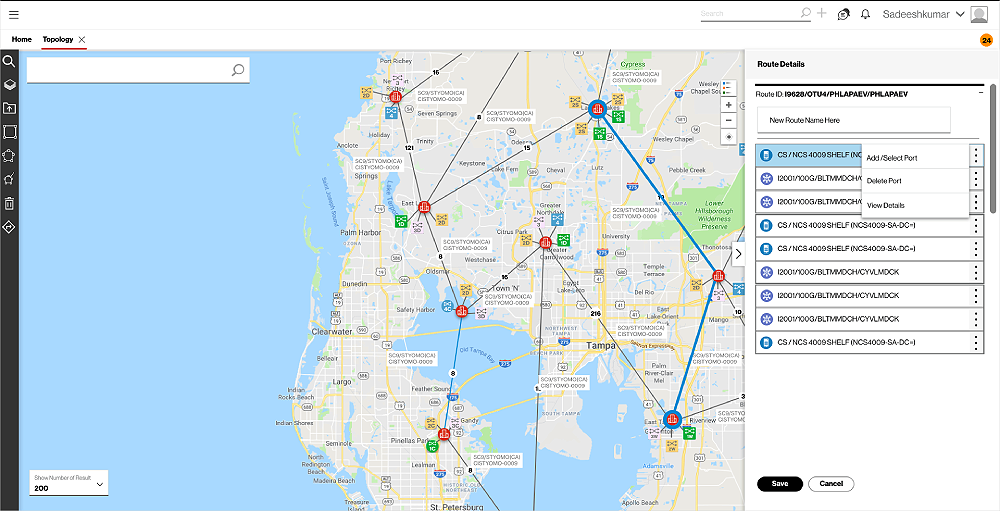
User journeys were mapped end to end across critical topology-driven workflows such as fault detection, impact analysis, circuit tracing, capacity assessment, planned changes, and post-change validation. These journeys highlighted friction caused by dense topology views, fragmented systems, and manual reconciliation across tools. By aligning the experience to role-specific needs—real-time resolution for network engineers, visibility and escalation for NOC teams, validation and auditability for compliance—the design enabled guided, role-aware workflows that reduced cognitive load while maintaining accuracy, traceability, and operational control in complex telecom network environments.

White Boarding & Brainstorming
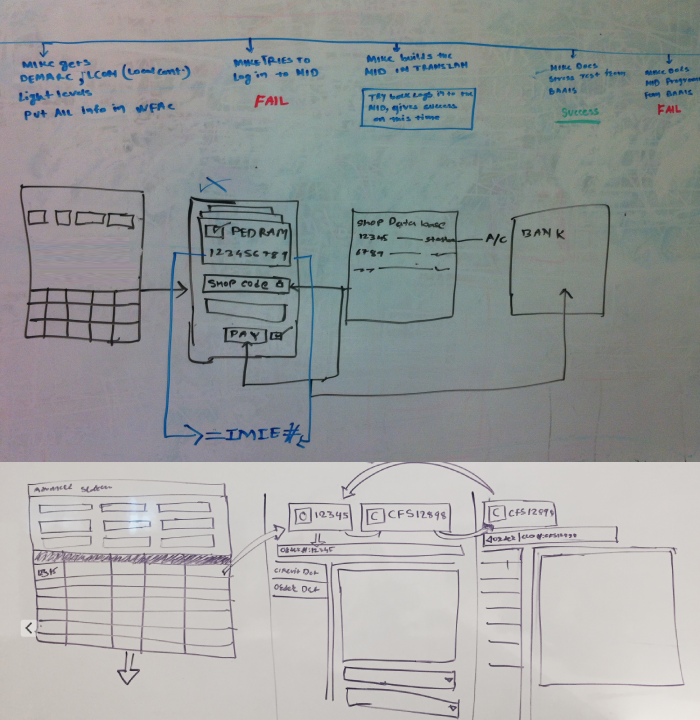
Whiteboarding and structured brainstorming were central to translating complex research insights into clear, testable design solutions. I focused on simplifying highly complex, multi-threaded and multi-layered network diagrams into linear, intuitive experience flows that users could understand and act on quickly. Early storyboards helped visualize end-to-end journeys across interconnected systems, allowing the team to reason about workflows holistically rather than screen by screen.

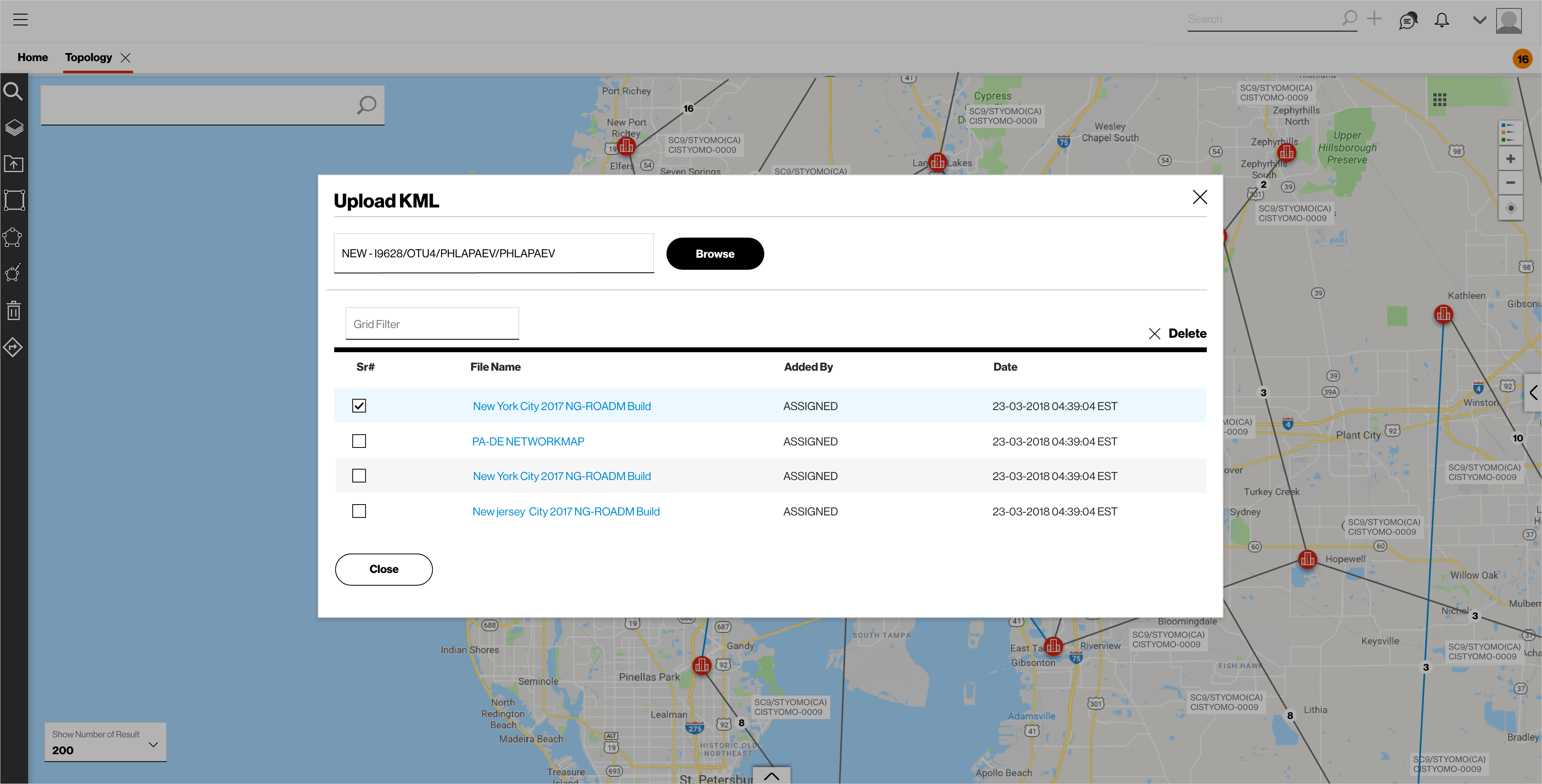
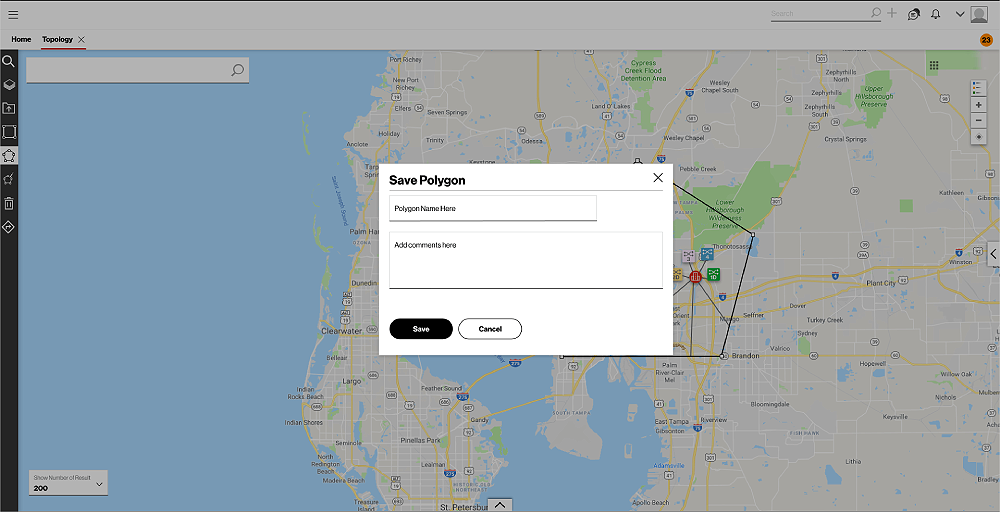
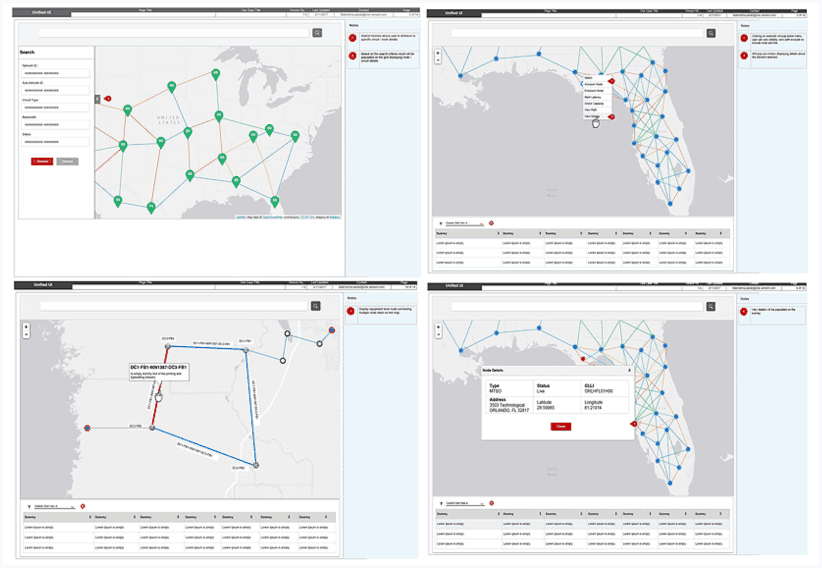
These sessions surfaced assumptions early and aligned product, design, and engineering teams around a shared mental model. By mapping how users actually moved through tasks, I was able to eliminate unnecessary steps, clarify decision points, and design interaction patterns where required data was intelligently surfaced by the system instead of manually selected by users. Iterative prototyping and continuous feedback loops led to refined solutions, including multiple contextual views (table, circuit layout, and map) that improved comprehension and usability before progressing into high-fidelity design and development.
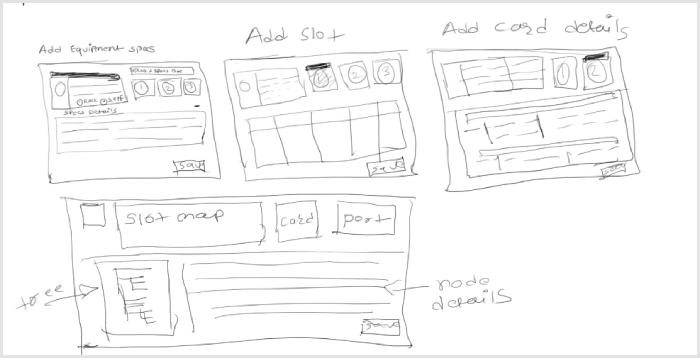
WIREFRAME

Impact
- 35% reduction in task completion time
- 40% reduction in training effort
- Unified platform adoption across business units
- Improved productivity, confidence, and trust in systems
Refining & Final UI
Final designs were reviewed and approved against defined UX guardrails, ensuring consistency across vendor execution, regulatory compliance, and brand expression. The outcome was a hiring platform governed as a long-term product system, not a series of isolated screens.